Meet the Coordinator: TU Delft – Helping Cities Become Climate Resilient with Digital Twins
Updated: Dec 12, 2025

As heat stress and air pollution increasingly ravages cities, the UrbanAIR project will develop a digital twin that supports decision makers to design resilient urban areas that can cope with the changing climate.
The digital twin can become a powerful tool for municipalities and urban planners to design districts that are safe, pleasant and healthy for residents. By simulating different scenarios, the digital twin will provide insight into, for instance, the wind that blows past a high apartment building, or how much heat stress will occur in determined city locations.
“Sometimes slightly different building layouts, vegetation designs and tailored material decisions can make a significant difference for the city inhabitants comfort”
Clara García-Sanchéz, assistant professor Architecture and Built Environment, TU Delft
TU Delft's Role in UrbanAIR - Developing a diverse and complex model
TU Delft leads UrbanAIR project and contributes to its scientific and technical foundations. The multi-disciplinary team at TU Delft works on:
Reconstructing urban geometry for accurate representation of city environments
Simulating urban wind patterns while accounting for uncertainty in meteorological data
Quantifying uncertainty in simulations of urban air temperature and atmospheric flow, and assimilating observations to improve estimates of atmospheric conditions
Developing behaviourally-rich agent-based models to understand how people adapt to climate-induced heat and how people's behaviours change in response to extreme heat and poor air quality
Supporting scenario-based decision support and explainability tools to help cities interpret and act on climate data
"First, we bring models of the global atmosphere to the local level. Second, we model citizens' behaviour, and third, we evaluate both human and natural criteria in urban decision-making"
Femke Vossepoel, Professor of Earth System Simulation at TU Delft, UrbanAIR project scientific coordinator
The resulting digital twin can work out different scenarios relating to different criteria in terms of finance, environment or social equity. This is how the tool can become the right hand for policymakers.
Providing solutions tailored to residents
The agent-based modelling for citizen’s behaviour, is an innovative part. What do residents do when it's hot? Do they go to the park? Go to a cool office? TU Delft is already world-leading in developing simulation models of societies consisting of thousands of individual agents. “The ambition in UrbanAir is to bring it to a next level”, explain Amineh Ghorbani and Tatiana Filatova of the department of Multi Actor Systems. “We will link climate change scenarios with surveys of urban residents to explore when and how they change behaviour to adapt to heat stress.”
Bringing meteorological models on street-level
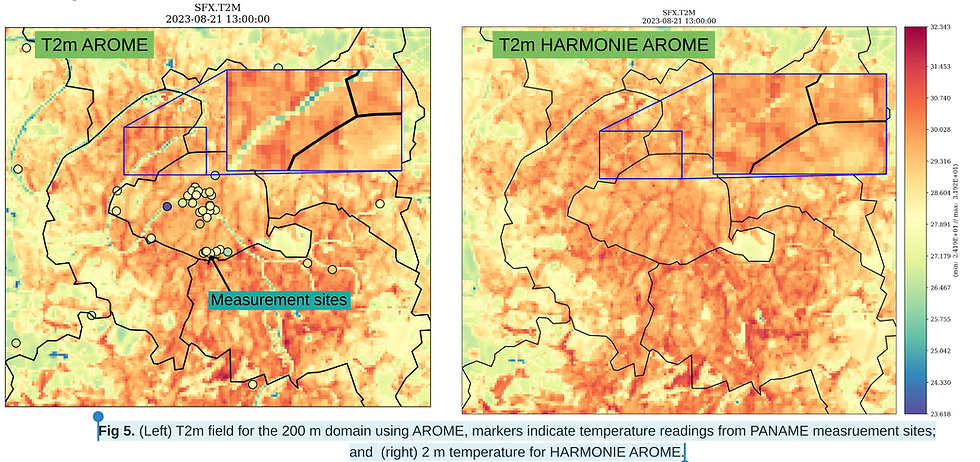
To model climate, the researchers will start working from an existing global digital twin of the Earth's atmosphere (Destination Earth). "We will create a cascade of meteorological models down to urban and even street level," Vossepoel says. "With sensors in several cities, we measure temperature, wind and air pollution very locally. There is a considerable challenge here, because measuring in the city is difficult. We have relatively few measurements for such an area with high atmospheric variability. We will experiment how to make the most of the available data with data assimilation."
These contributions shape UrbanAIR’s digital twin, making it a practical and science-based tool for sustainable urban planning, informed decision-making, and climate resilience.
By simulating how urban infrastructure, climate dynamics, and public behaviour interact under stress, TU Delft helps ensure UrbanAIR delivers insights that are actionable and equitable, supported by a decision support tool that helps translate complex climate and behavioural data into clear, actionable strategies for cities.
The TU Delft Team
The work is carried out by a diverse and collaborative team, including many outstanding scientists and engineers driving forward innovation in climate science and technology. The team includes leading women researchers such as Femke Vossepoel, Clara García-Sánchez, Jantien Stoter, Tina Comes, Amineh Ghorbani, Tatiana Filatova, Anna Gralka alongside pier siebesma.
About TU Delft
Delft University of Technology is the largest technical university in the Netherlands. Each year, an average of 350 PhDs graduate from the TU Delft, and we publish nearly 6,000 journal articles, conference papers, and books. Recognised with the HR Excellence in Research award by the European Commission, TU Delft is ranked 56th in the Times Higher Education World University Rankings 2024 and 13th globally in Engineering and Technology.
The university maintains strong ties to industry, with many successful spin-offs emerging from its research ecosystem.
To learn more about TU Delft, visit their website: tudelft.nl
Follow the Series
Stay tuned as we continue to highlight the organisations shaping the UrbanAIR project. Follow us UrbanAIR on LinkedIn and Bluesky and subscribe to the UrbanAIR newsletter.
This article is edited based on the publication of the Technical University of Delft.


Comments